Graphic by Dina Kats
By Eve Cohen
Features Reporter
The high school experience is normally a stressful one to begin with; however, normally, there is not also a global pandemic for students to contend with. COVID-19 has undoubtedly brought mental health, along with physical health, to the forefront of the minds of students and faculty alike.
At South, wellness classes face a unique challenge in the new age of online schooling: trying to bring strategies and support to a student body struggling with their mental health perhaps more than ever before.
Almost a year into quarantine, being trapped inside has made wellness techniques difficult to keep up with and stranded most people in a bubble of mostly immediate family.
Junior Celia Remis has observed the toll the pandemic has taken on her friends and classmates, citing reasons such as the isolation and students’ soaring computer usage. “It’s just hard to motivate yourself to get ready, and all the days feel kind of similar,” explained Remis.
The effects may have been especially pronounced for one group of students in particular: the Seniors. The college application process this year has been just as rigorous, if not more so, than previous years, but Seniors found themselves stranded away from the aid of their peers and counselors.
This is just one of a number of issues that students at South are facing in relative isolation. “It’s so much harder to get support through online stuff, so whatever people are dealing with, they feel like they can’t even have a support network,” observed Senior Maya Makarovsky.
In response, students have sought out different ways to improve their mental health during the pandemic. Many are reaching out to try to offset the loneliness caused by the lengthy quarantine.
“Seeing friends, distanced, maybe every week definitely helps, so it feels less isolating,” said Remis.
In some cases, they are seeking out habits to fill their free time away from school. “I started giving myself a lot of small things that I enjoyed. I just started to carve out time to do them, like playing piano, learning songs on the ukulele, dancing,” said Makarovsky.
In other cases, students’ mental health practices take the form of well-known techniques such as meditation, yoga, or exercise, methods that are traditionally taught in wellness classes.
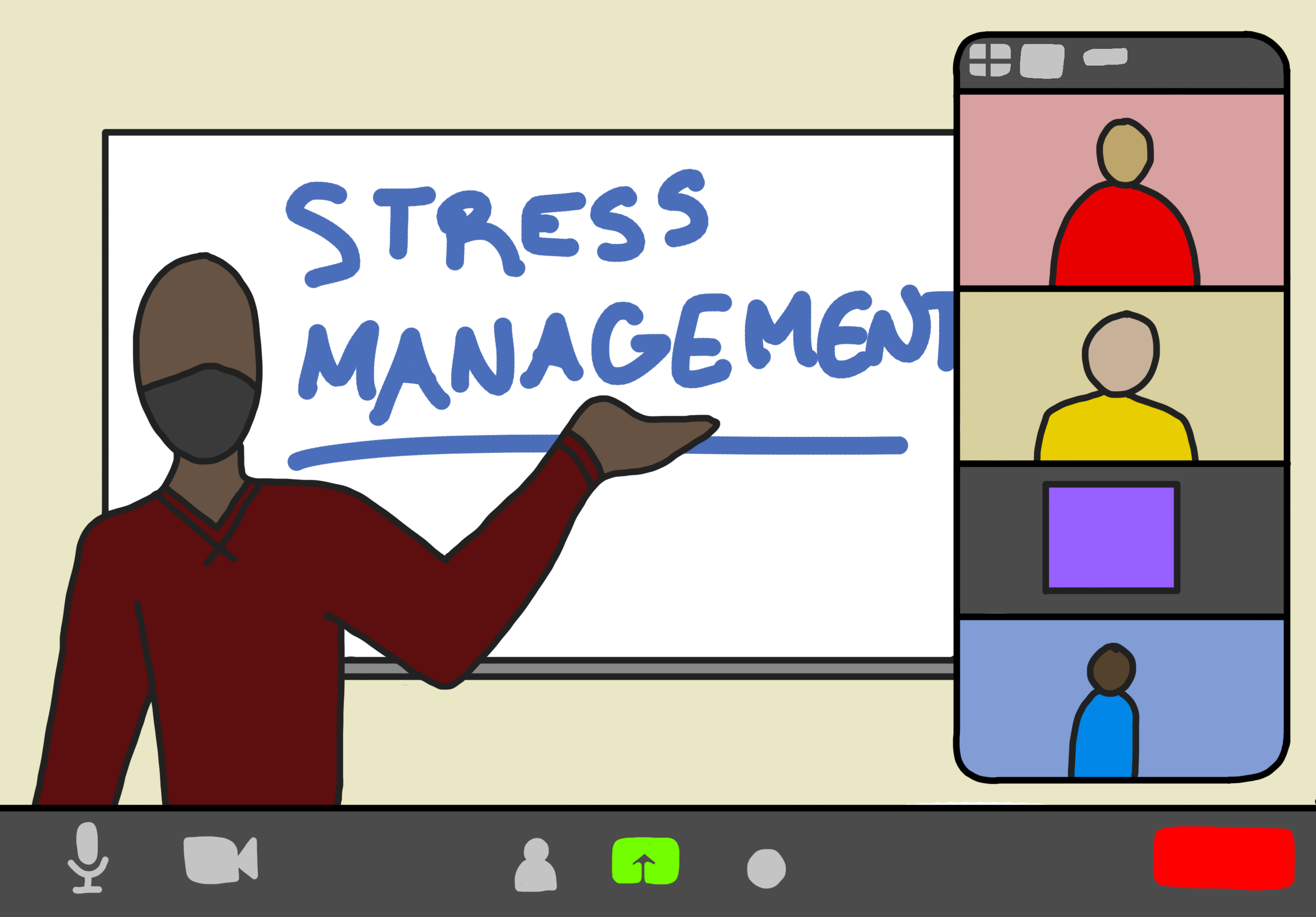
South offers a variety of specific health and wellness courses, mostly for Juniors and Seniors, but this year the wellness teachers have had to come up with a more efficient way of teaching these strategies to as many students as possible through the online and Hyflex learning models.
Their solution was to draw heavily from the curriculum of the Centered Self class available in previous years, among others, to create a new course, 11th and 12th Grade Wellness, “which is designed to give students options and the opportunity to try stress management and healthy relaxation techniques,” described wellness teacher Carrie Hanover.
However, both students and teachers alike doubt the efficacy of instructing this way, as just as with other classes, there is certainly a struggle with reaching students in an online format.
“The options are so limited, and there is so little connection that I just don’t feel like we are helping as much as we do when we’re in person,” said Hanover.
Additionally, as helpful of a resource as wellness classes can be, the combination of curriculums can make 11th and 12th Grade Wellness redundant for some students, especially those who took Centered Self in previous years.
For those students, the class may function as just another period on their computers, with fewer benefits than for their classmates. “I think I would have enjoyed taking time off of Zoom to do my own yoga,” explained Makarovsky.
The additional time on Zoom was something that the wellness teachers took into consideration when designing their curriculums for this year. Students have to sign on to Zoom for some portion of the class, but whenever possible, teachers provide time for individual work, allowing students to have a break from the screen for the rest of class.
“For all the reasons that everybody knows, the blue light, sitting, all that kind of stuff, we were hoping to get kids away from the computer and present them with other options,” noted Hanover.
Wellness teachers this year were also very intentional about providing individual work and rest time for students, with their mental health in mind. As teachers are still teaching mostly over Zoom, wellness classes can provide a good template for how best to help students.
“I know that it’s hard for teachers because you get on a roll… but a break is important, and then it’s up to the student to make a choice to not sit there on the phone, but to get up and just walk around for five, ten minutes,” advised Hanover.
Students have expressed similar sentiments about Zoom classes. Along with breaks, other common suggestions have circulated for how teachers can provide the best support for their mental health and wellness.
“Splitting up into discussions and just trying to engage the class is probably the most important thing,” explained Remis.
In general, teachers’ support for students looks much different this year than most. Because most teachers and other adults are less available day-to-day, the wellness teachers are trying to provide resources for students to help themselves through this tough time, and through any tough times in the future.
“We know it’s hard on everybody, and we hope that everybody is at least seeing some excitement, some hope, some light at the end of the tunnel,” said Hanover.