Graphic by Audrey Kim
Tae Hong
Opinions Columnist
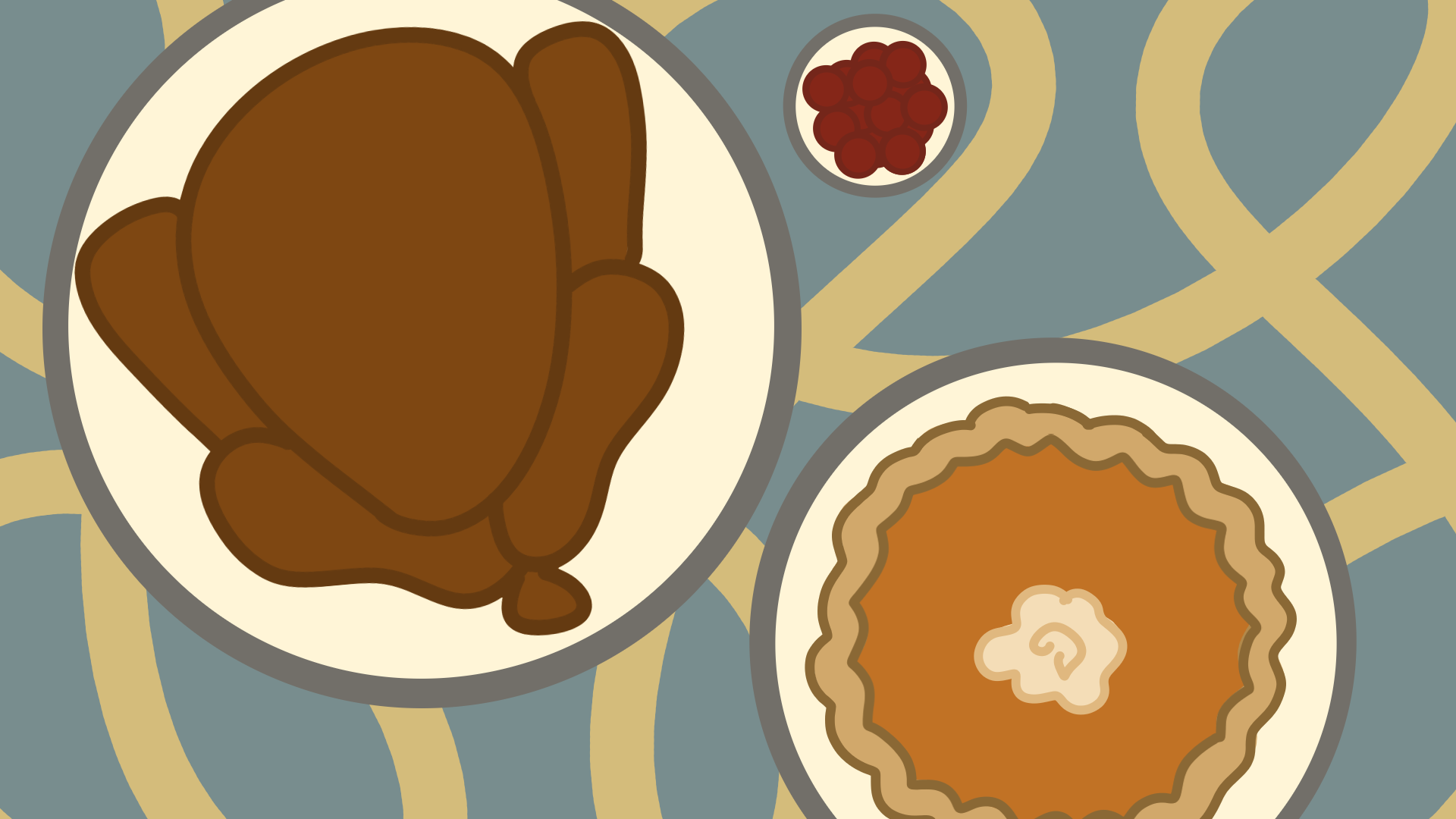
As we near Thanksgiving, it’s time to look forward to our plans to celebrate. Many eat turkey and mashed potatoes, some travel, lots see family, and others don’t celebrate the holiday at all.
Thanksgiving is a holiday where we give thanks and show appreciation for the good things in life. The common origin story of Thanksgiving is based on a large meal between the Native American people (Wampanoags) and the pilgrims to show thanks to the Native American people for showing the pilgrims their way of life. The holiday essentially celebrates the peace between the settlers and Native Americans.
However, the settlers forced the Natives to assimilate and caused a genocide across the continent, so for some people, the holiday is a reminder of this dark part of our country’s past as well as the current treatment of Indigenous people. “Thanksgiving is kind of like Columbus Day for Native people,” says Robert Magnan in this article, a member of a tribe in Fort Pack. “Why would we celebrate people who tried to destroy us?” asked Magnan.
Even so, one could claim that most holidays have some sort of negative background. Many of the more popular holidays in the US have become an opportunity for capitalism to flourish anyways. Thanksgiving has become a large holiday that values family and gratefulness, and there is no way that we as a society could “cancel” something so valuable.
“Holidays serve a lot of different purposes. There’s a fundamental need to stop work and gather with family, celebrate over a meal and have a meal together. I think few people genuinely celebrate the actual history and legacy of Thanksgiving, although we eat some of the similar and traditional foods. Most holidays have become divorced from their origins but Thanksgiving has more than holidays like Christmas,” says history teacher Jamie Rinaldi, acknowledging the fact that nowadays, Thanksgiving is celebrated as a time to be with family more than giving thanks to the Native Americans. (Fun fact: Mr. Rinaldi is descended from John Alden, one of the Pilgrims on the Mayflower!)
“We never celebrated Thanksgiving because we didn’t have a reason, although we do get together and have a big meal. And sometimes we will get together with our other immigrant friends,” said Jena Foster, whose whole family has immigrated to the US and does not celebrate Thanksgiving or the Fourth of July.
Junior Maya Mohanti’s family doesn’t celebrate Thanksgiving either. “I’m first-generation, and my family never decided to celebrate Thanksgiving because my parents never celebrated it since it’s not part of our heritage. We just use it as a relaxing time and break,” said Mohanti.
Although neither I nor my family are immigrants, my great-grandparents, as new immigrants, chose to do certain things as an attempt to assimilate and fit into their new country, like celebrating American holidays like Independence Day and Thanksgiving.
“I’m also first-generation, and I celebrate Thanksgiving because my parents are Christian, and we go to church and have Thanksgiving dinner with everyone. It’s more just a holiday of family and thanking God,” said junior Isabel Dantas, explaining how her family ties Thanksgiving into their religion and giving thanks. “During Thanksgiving, we should still talk about the suffering of Native Americans and educate each generation on the real history of America,” concluded Dantas.
For me, Thanksgiving is a lovely holiday, with delicious, almost nostalgic, food and a wonderful time to spend with family. But we should keep in mind the struggles of Native American people, which will always be entwined with Thanksgiving because of its history. Happy Thanksgiving, and remember there’s always something to be grateful for!