By Astha Agarwal and Melanie Erspamer
Monday’s two explosions near the finish line of the Boston Marathon stunned South and left a profound impact on the students and families participating in the marathon, as well as those observing.
“[Monday] will change the way we think, the way we act, the way we prepare our days, and how we execute government,” Mayor Setti Warren said Tuesday at City Hall.
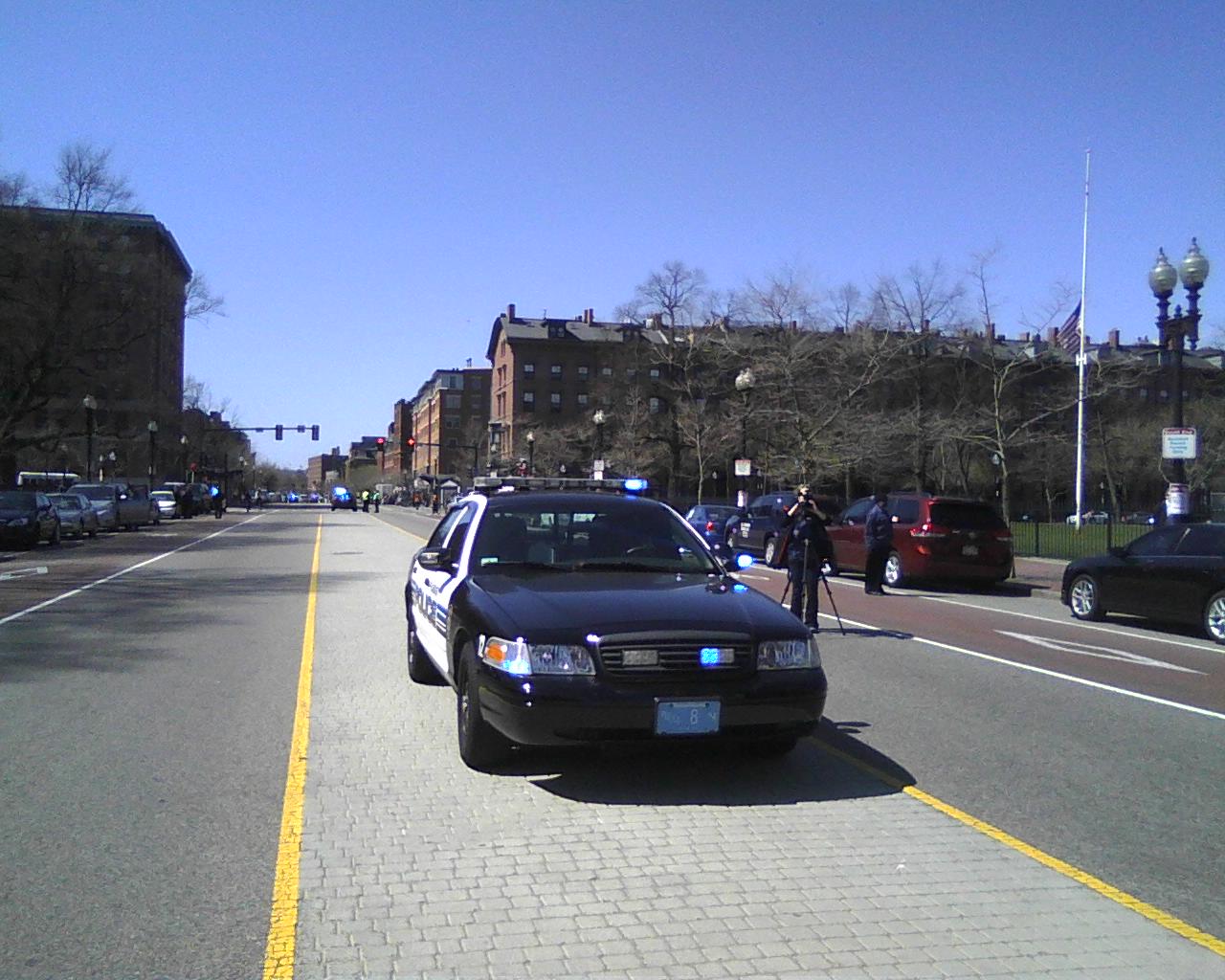
The powerful bombs killed three people and injured more than 100 during the half hour of the marathon when the greatest number of people normally cross the finish line, transforming the atmosphere of this year’s race from a scene of cheering and festivities to one of chaos and carnage. The race has been run every year since 1897.
Runners in Newton were diverted to shelters at St. Ignatius Church and Newton City Hall at this time, and provided with food by Boston College’s food services, said Lieutenant Bruce Apotheker, spokesperson for the Newton police.
Although other bomb scares continued throughout the day since every bag or backpack left behind by a runner or spectator had to be dealt with as a possible threat, all suspicious packages found in Newton were examined and deemed to be safe, Apotheker said.
A fire at the JFK Library was initially thought to related to the explosions, though it was later determined to be unconnected.
As junior Danny Teich, who had joined his Dreamfar mentor to run the last eight miles of the marathon, reached mile 25, the city of Boston closed of the area around the finish line and cancelled the marathon, establishing a no fly zone over the sites of the explosion.
Teich remembered hearing sirens at mile 23, though he did not think anything of them at the time. As he kept running, however, viewers on the sides warned him of an accident and an explosion at the finish line.
“At first I still didn’t think it could have been a bomb or something; I thought it was an oil
bin in the trash cans,” Teich said. “I was in denial that it was anything major.”
When officers began yelling for Teich and the other runners to go to the side of the road so that police cars could pass, he began to grow more worried. At mile 24, he managed to borrow a cell phone and text his parents to say he was okay. At mile 25, he said, the police ordered all runners out of the road and ended the marathon.
“We were not sure if they were okay, and we wanted to be sure that they were okay,” said John Teich, Danny’s father, who also had a brother-in-law in the race. “And so until they sent us messages, we just didn’t know.”
Seniors Raquelle Zelada and Jessie Rosen, who were watching the marathon at mile 24 at the time of the explosions, said they considered going over to Newbury Street, but fortunately decided to stay put.
“Jessie and I both had some weird gut instinct not to go to Newbury Street,” Zelada said. “I really think everyone should go with their first instinct to not push it.”
The mayhem that followed the explosions as people rushed to contact their families and friends soon turned what was supposed to be a joyful day into a tragedy, Rosen said.
“It opens up our lives locally,” Zelada said. “In other countries people are constantly living in fear and it reminds us how grateful we are to live in a country where we feel safe.”
“For all that we react to things like this on the news and feel sad, it is so much visceral, it’s so much deeper and so much more powerful when it’s your own,” John Teich said.
Students on the Dreamfar marathon team were not running in the event, but had gathered in Wellesley to watch the race, according to an email Jason Agress of the technology department sent to the NSHS faculty. Several adults from the team ran in the race but all were unharmed, Agress wrote.
Junior Mara Ezekiel said her father always runs the race, and as usual she was there to cheer him on, this year at the 19th mile where the runners trek up Heartbreak Hill.
When she returned home, a friend told her to turn on the TV, where she saw the bloody footage.
“Before I knew it was at the Boston Marathon it was like, this is sad, but when I found out it was at the finish line, [I] was [in] sheer panic and wondering where everyone was,” Ezekiel said.
Her father was in the shower, but her brother had been heading over to the finish line to meet some friends. He turned out to be fine, but three of his friends, all Tufts students, were injured by the explosions and were taken to the hospital. Though they were not seriously injured, Ezekiel said her brother was shocked by the events.
Though their entire family was taken aback by the explosions, Ezekiel and her father Ephraim said they believe people will continue to run and watch the marathon in the coming years as they have done in the past. Ephraim encouraged people to keep running, calling the marathon one of Boston’s defining features.
“We’re not in a war zone,” he said. “We’re in a city, and life has to go on. These things are unfortunate and affect people when they happen but we can’t [let them] change our whole way of life.”
Junior Beth Yudelman said her father also regularly runs the Boston Marathon. She was with her sister and her mother at the race watching, but none of them understood what had happened until they arrived home. From there they contacted Yudelman’s father, who was unharmed, but after the T was closed, had to take the commuter rail and arrived home several hours later.
“Everyone has to be there for each other,” Yudelman said. “The amount of support my family received during this was unreal, it just made it so much better. So just be there for everyone because you never know when something like this could happen; it could happen at any second.”
Yudelman’s father, Errol, runs each year for a club, the Heartbreak Hill Striders, that has a gym half a mile from the marathon, which its members use at the end of the race.
Yudelman finished the marathon at about 1:20 p.m. and headed to the gym, and was preparing to leave when the manager told the runners about the explosions and asked them to stay put.
Later, Errol was able to depart and safely find a way home after unsuccessfully trying the T.
“I think running gives everyone freedom,” he said. “They can just put on their shoes and go out running anywhere they want, everywhere they want. I think this [incident] really challenges the concept that running is a free sport and anyone can do it and they can do it anywhere.”
The Yudelmans hoped additional security measures would be in place in the future, so that such a tragedy could be avoided.
These measures, they said, would also be necessary to persuade more people to keep running it in future years.
“Running is what I do and I run the Boston Marathon, and unless they cancel it forever I’ll try to [keep running] it,” Ephraim Ezekiel said. “It won’t change my ways and even the spectators’, I’m sure they’ll still go out and be there. We can’t forget this event but on the
other hand we’ve still got to treat it as the Boston Marathon and I think it will be.”
“It’s kind of like things like death are just a dictionary definition until they happen to you or someone you love,” Ezekiel said. “Other events will hopefully inspire us to take actions. We just need to be there for each other in this community, but also in the rest of the world.”
St. Paul’s Episcopal Church in Newton held a peace vigil Tuesday night for the victims of the explosions.
Newton City Hall held a vigil for the victims at 6:30 pm Wednesday.