
By Albert Wu
Managing Editor Of Opinions
You’ve been grabbed by the neck and thrown onto the ground. Before you know it, you’re being dragged across the floor, face first. This sounds like a scene from the newest James Bond movie or a perhaps a WWE fight, right?
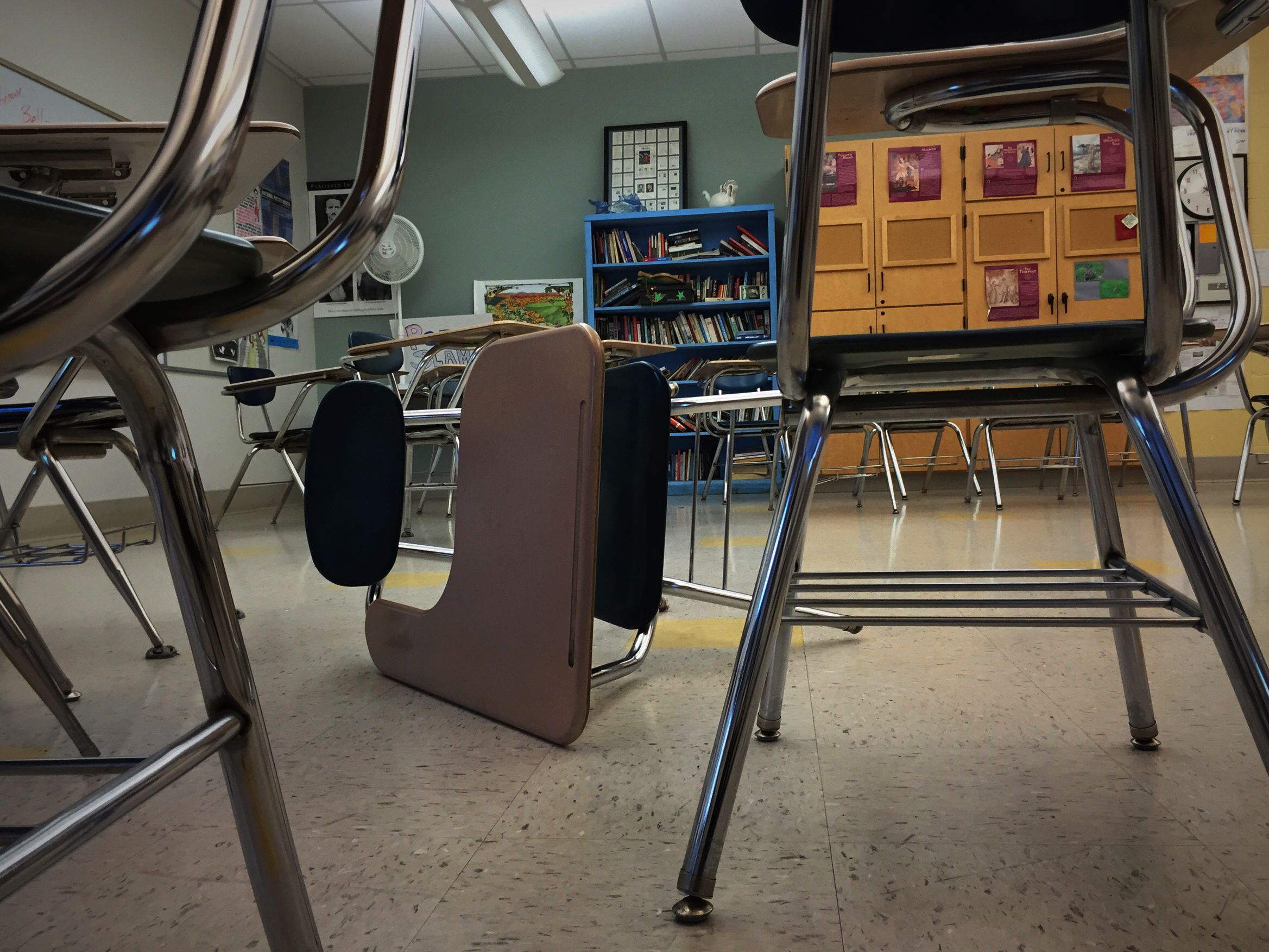
This happened in a classroom.
On Oct. 26th, a female student was flipped backwards out of her desk, slammed onto the ground, and arrested by a school resource officer during class at Spring Valley High School in South Carolina (see video below).
The reason? Disruptive behavior and refusal to leave the class.
Cell-phone recorded videos of the assault exploded on social media. The incident gained national attention and prompted questions about school discipline – and rightly so. This incident was by all means unacceptable.
“That was something that doesn’t come close to what our process looks like here at South,” Cutler housemaster Josepha Blocker said. “I found it pretty disturbing and unsettling.”
The assaulted student had allegedly refused multiple orders to leave the room, which led to the school authorities calling the SRO to arrest her. Although the student prompted the initial conflict, the steps taken by both the school and the police were out of hand.
“For an officer to come, there would have to be something criminal for them to even have a presence in the room,” Goodwin housemaster Charles Myette said. “That’s protocol we wouldn’t get to.”
Myette stresses the point that it would have to be an extreme case for an officer to be called. Only in situations where the safety of students is compromised, such as possession of a weapons or bomb threats, are the police required.
Being disruptive in class in no way merits the presence of the officer, let alone the assault the student faced.
“Authority in schools should only use physical force if the person they are using it against is threatening the physical well-being of others,” sophomore Cameron Miller said. “The punishment should fit the crime.”
Authorities say that they are protecting the learning environment; however, not only does assaulting a student further disrupt the learning environment of a classroom, it destroys the relationship between the students and the school.
“That student’s probably doing class somewhere else right now while they try to repair that relationship,” Myette said. “There is also so much repair needed to regain the learning atmosphere for the entire class”
Luckily, South has a far more appropriate approach to these types of situations.
“We focus on building relationships with students,” Blocker said, “It’s much better if someone you know helps and talks to you, rather than a stranger. We hope that our connection with students give us headway in these situations.”
Myette agrees with the effectiveness of conversation with students, rather than punishment and violence.
“It’s about connection and de-escalation. When someone comes through our doors, it’s about trying to resolve something and moving ahead. It’s not just about the rules and consequences.”
However, we shouldn’t take this type of discipline for granted. We’re lucky to have such a structure and system of support.
“As a city and and as a school, we have better behavior management programs in place,” South senator Emma Henderson said.
It’s easy to forget about the resources South funds in order to maintain a healthy student body and student-school relationship. From housemasters and guidance counselors, to Southside and the High School Stabilization Program (HSP), South offers many avenues for support.
“We are a school that is well funded and have a lot of active student and parent resources and are lucky to be able to do this type of discipline,” Blocker said. “We should be grateful – a lot of places in this country aren’t as fortunate.”
With a black student and a white officer, the incident also draws criticism from many racial equality groups across the nation. With recent racially-charged events like the Ferguson riots, it’s hard not to perceive the classroom incident as an act of racial prejudice.
However, factors like how the teacher who called the SRO was actually black further obscures whether or not this was an act of racism.
“There’s a difference between personal racism and institutional racism,” Blocker said. “In this case, it’s more about institutional racism and how police forces see the black community.”
“Adults many times make errors with students due to pre-judgements or assumptions,” Myette said. “How a student is treated could be about race, or it could be whether or not he or she held the door open in the hallway.”
In addition to the behavioral resources, South strives to both educate its students on racial issues and also provide a safe environment for all.
“For us to say there is no institutional racism here at South would be naive and unfair,” Blocker said. “[However], we are part of a system that actively pursues anti-racist agendas and it is something we are very conscious about.”
https://www.youtube.com/watch?v=w3T5yVBz5j4
Warning: video may contain violent images.
Featured image taken by Samuel Lee.


