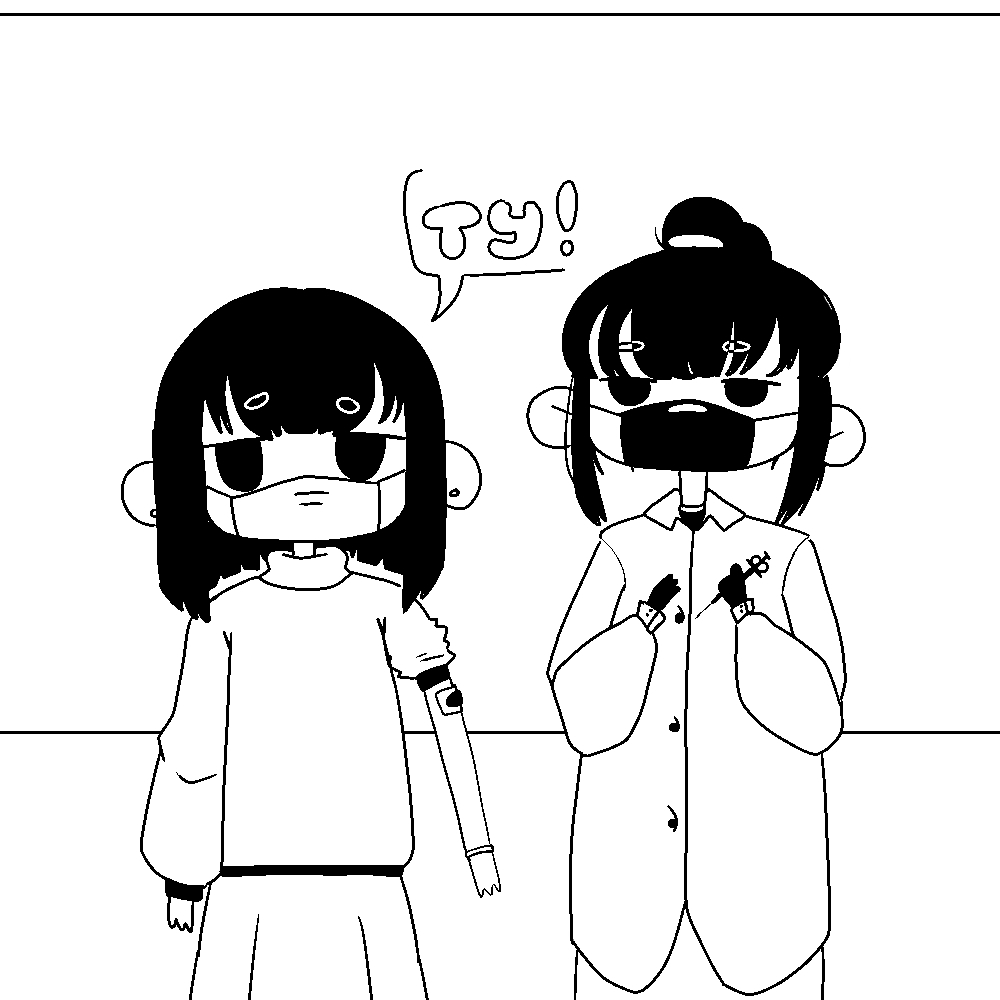
Graphic by Angus Nichols
By Rana Moeinzad
Features Reporter
A little over a year ago, the world flipped upside down due to the COVID-19 pandemic, and the lingering question of vaccination is starting to be answered. Now, students above the age of 16 are eligible for preregistration and doses of the COVID-19 vaccine.
Controversies around the speed at which the vaccine was produced, and its unknown long-term side effects, have made their way through news cycles and social media platforms since word of potential vaccinations got out.
“I was comfortable with getting the vaccine. My mom got it pretty early because she works at Brigham and Women’s, and I saw her having mild symptoms and side effects after,” said Grace Cowhig, a senior who has had her first dose of the vaccine. “Obviously, no one really knows the long-term side effects, but I think there is a risk versus reward part to it, and I think it’s sort of important that everybody gets it.”
“Just do your research before getting it, and just know the side effects,” said freshman Alexandra Ossipian, who is ineligible for the vaccine because of her age.
Before distributing the vaccine, vaccination centers inform everyone about the possible side effects, which can be conflicting these days amidst fake news and rumors going around. “I think it really depends on the person. If you’re really worried about the risks, then hold off for a little and if you’re not worried as much, then go for it,” Ossipian continued.
Like Cowhig, Junior Gabriel Weiner was quick to get his first dose and even has his second dose scheduled. “It was pretty easy to book it. I got it at Hynes convention center, and it didn’t take that long for me to get it,” said Weiner.
“I don’t think I really thought about the controversy and the long-term side effects part of it that much. I just wanted to be vaccinated so it would be safer for me and for other people and so I can do more normal things. I knew there were side effects, but that’s usually normal for any vaccination,” added Iris Ham, a junior who hasn’t been able to get an appointment yet, but is preregistered.
The pre-registration program that Ham signed up for has been controversial in its own way when it comes to accessibility. “I was super surprised with how easy it was, but I’ve also heard from a lot of other people that it’s not that easy for them,” said Cowhig, who got her first appointment just 4 days after signing up.
Appointments have been given to healthcare workers, people of older age, and immunocompromised individuals first, which should continue to be a priority. “I think for our age, especially for people without pre-existing conditions, there’s little need for a vaccine when we are at such low risk, especially if we’re taking it before people who at risk get the chance to get their doses,” said Weiner.
Ossipian added, “I don’t think I’ve ever heard of any of the preregistration programs or signups; I haven’t heard of anyone else in my grade who has either.”
Although underclassmen remain ineligible for vaccines at the moment, education and awareness are the next steps to tackling the virus. “School opening up to 4 days a week is a little concerning just because social distancing might be a little harder and the classrooms are going to be a lot more squished and crowded. But just because we all have masks, I feel like I’m not as stressed because that’s [a rule] you have to follow,” said Ham.
As more people become immunized, theoretically, teachers will be back in the building, and the incoming class of 2025 will be able to lead a near-normal freshman experience. “I didn’t choose to go in person because a lot of my teachers weren’t, but I think if I was going into school, then having the vaccine would make [me] more comfortable,” said Ossipian.
Cowhig, who spent the first half of her senior year on Zoom, says she was eager to get back in the building. As she explained, “I decided I wanted to go back to school before I knew I was getting vaccinated because cases were going down… but I think it’s nice to not have to constantly worry about those emails from Mr. Hardiman that say ‘someone has tested positive.’”
Weiner, too, is ready to be back in the building regardless of vaccines but finds comfort in being able to see others without feeling like he is posing a threat to their health. “I would still go to school four days a week if no one was vaccinated. It doesn’t really bring me much peace of mind since I always thought [students] were pretty safe because we’re all so young, but it’s [comforting] because I feel like I can protect the elderly and people with preexisting conditions better.”
As vaccinations continue to roll out and become more available to people statewide, considering what the future looks like seems realistic for other students as well. “I think it’ll be nice to have a close bubble and not have to worry about social distancing and masking as much if we’re all vaccinated,” said Ham.
Visiting family has also been a huge obstacle during this pandemic. “I haven’t seen my grandparents in a super long time because they live in Florida during the winter, and so obviously, I haven’t felt comfortable going to Florida because it’s a hotspot. Once I get fully vaccinated, I’ll be more comfortable doing that,” said Cowhig.
After a year of getting take out from restaurants and hanging out in isolation, the thought of eating out is refreshing. “Probably just travel or go to restaurants, obviously, I would still follow COVID-19 regulations, but just getting to go out a bit more, maybe see friends more often. I haven’t gone and sat down at a restaurant since I think the start of the pandemic,” replied Ossipian.
Being comfortable out of the house is important now that life is opening up again, and for Cowhig, who is off to Tulane University in the fall, it is especially important as she will be in a new city meeting new people. “When I go to college next semester in the fall, they’re starting the year without most restrictions, so we’re still going to have to wear masks and stuff, but there isn’t going to be anything online, so that’s going to be a huge change that I’m looking forward to after being on Zoom for like half a year.”
After a year of the ongoing COVID-19 pandemic, vaccines are being rolled out worldwide, but this does not mean life is back to normal in a couple of months. Even with people getting immunized, following social distancing and masking rules will continue to be important.
Ham concluded, “It’s nice that people are getting vaccinated because that’s good for them, but they should obviously still be wearing masks because there are other people at risk [too].”