
by Albert Wu
Opinions Reporter
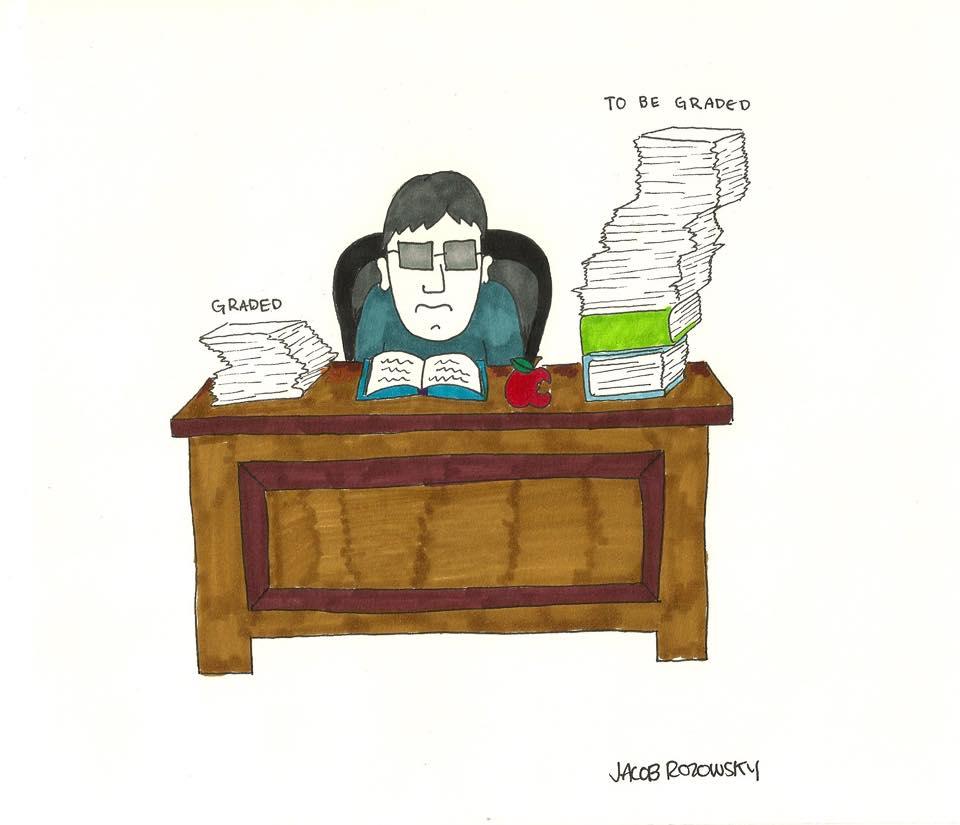
Teachers need to realize that teaching is only half their responsibility; grading is just as important.
Although grading has become more efficient due to the likes of Engrade and Schoology, one issue still stands: on-time grading.
Junior Caleb Brandstein has had experience with this issue throughout his time at South, sometimes receiving grades on work as quickly as the next day, but sometimes not receiving a grade for months.
“I know when I hand something in, I won’t get it back for at least a month, sometimes two,” Brandstein said.
Brandstein had three ungraded tests for a single class by the end of the term, not to mention an essay and poster project.
When a teacher fails to grade assignments on a routine and scheduled manner, his or her own students are hurt both mentally and academically.
“Teachers that don’t grade on time are the ones leaving me the most anxious throughout the term,” Brandstein said.
Where is this constant uneasiness coming from? It’s coming from teachers’ inability to grade on-time, which literally blinds students.
“I have no clue what my is grade until the last couple days, so there’s nothing I can do,” Brandstein said. “It doesn’t give me a chance to improve or change my study habits for the class because I really have no idea if I’m doing well or not.”
It’s shocking that not all teachers recognize the amount of unnecessary stress they cause students by failing to grade on-time. Teachers aren’t just stressing students out, they’re disabling them from succeeding.
Students are so consumed with checking past assignments on Engrade and Schoology that they lose focus on the assignments ahead of them. By the time they get tests or quizzes back, the feedback is practically useless.
“I would want to know what I did well and what I need to improve on for the next test, but if I don’t get a test back and already have to take a different one then I can’t do that,” junior Inbar Hazan said. “If teachers hand back work really late then the class has probably already moved on to a different topic and you have already forgotten the details of the previous unit.”
“At that point it’s just a lot harder to try to get yourself back into the mindset you were in while taking the test to try to see where you went wrong.”
A solution to this dilemma is to talk to the teachers who do not grade in a timely manner; however, most students are met with the same explanation on how “busy” the teacher is. But shouldn’t a student’s success be a priority?
It’s true that many teachers have commitments outside of the classroom, but this is not an excuse. Teachers have to consider the amount of effort students put forth in their work, and reciprocate it by grading in a timely fashion. As said before, teaching is only part of a teacher’s duty.
Change has to come from above. Talking to department heads may be the only solution that teachers take seriously. These conversations can be anonymous, but they really shouldn’t have to be.
A student’s connection with his or her teacher should be close, strong, and open. For this to happen, on-time grading is essential.


